NASA’s Orion Spacecraft at the Launch Pad
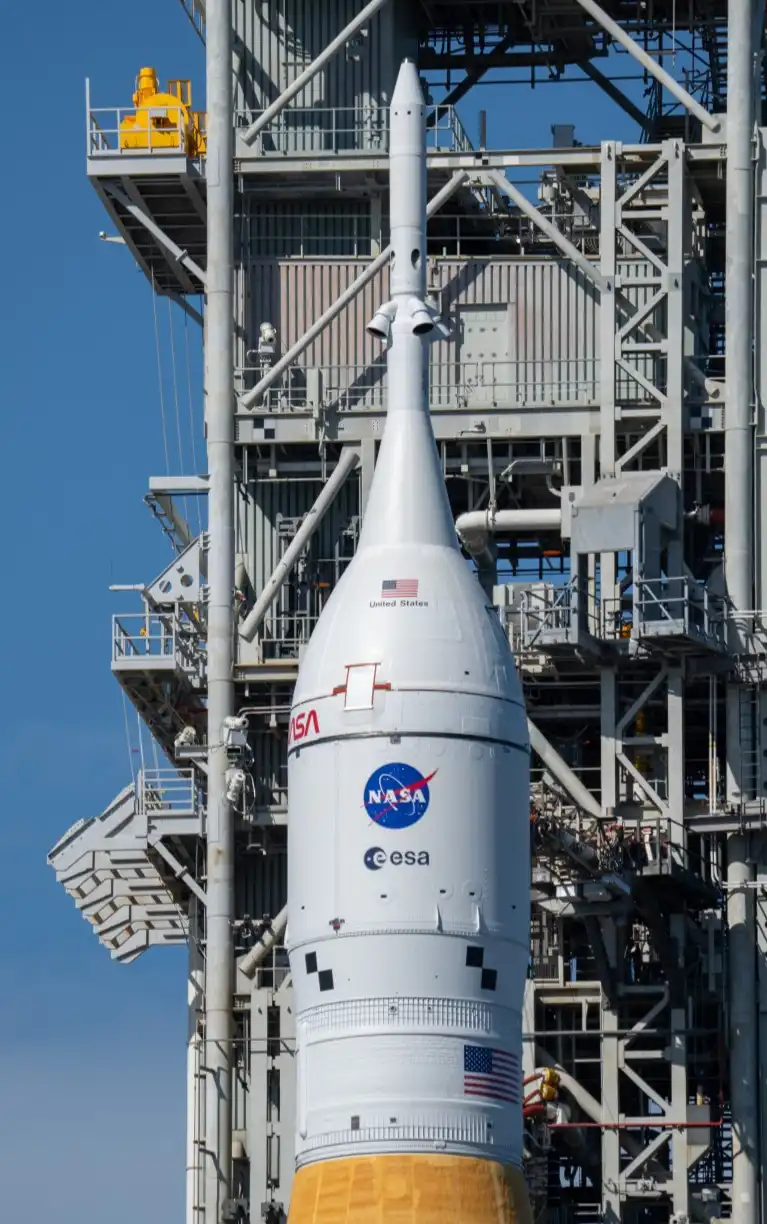
NASA’s Orion spacecraft has reached a major milestone as it now stands at the launch pad, fully stacked on top of the Space Launch System (SLS) rocket. The rollout was completed on January 17, 2026, marking a critical step toward the upcoming Artemis II mission, which will send astronauts on a journey around the Moon.
Orion is designed to support four astronauts on deep-space missions lasting up to 21 days without the need to dock with another spacecraft. This capability makes it one of the most advanced human-rated spacecraft ever built.
Built for Deep Space Travel
The Orion spacecraft includes modern systems developed specifically for long-duration missions beyond Earth’s orbit. These include advanced life support systems, updated avionics, reliable power systems, and a state-of-the-art thermal protection shield. Together, these technologies are designed to keep the crew safe during launch, spaceflight, atmospheric reentry, and ocean recovery.
A Key Step in the Artemis Program
Artemis II will be the first crewed mission of NASA’s Artemis program, following the uncrewed Artemis I flight. While the mission will not land on the Moon, it will validate spacecraft performance, crew operations, and navigation systems in lunar orbit, paving the way for future missions to the Moon and eventually Mars.
As Orion waits at the launch pad, it represents years of engineering and planning focused on returning humans to deep space.
Image Credit: NASA / Brandon Hancock